
Polar Bolero
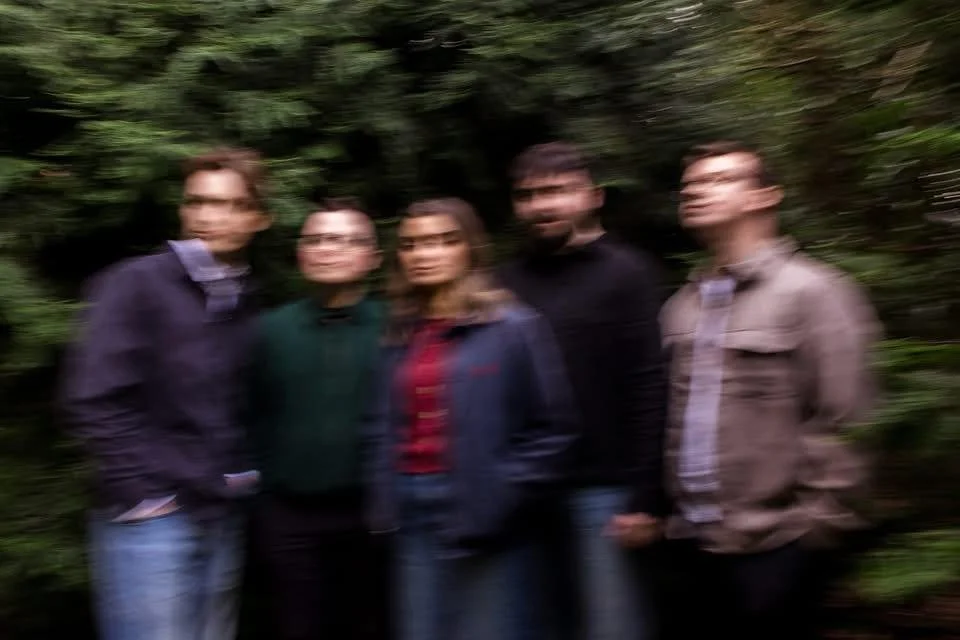
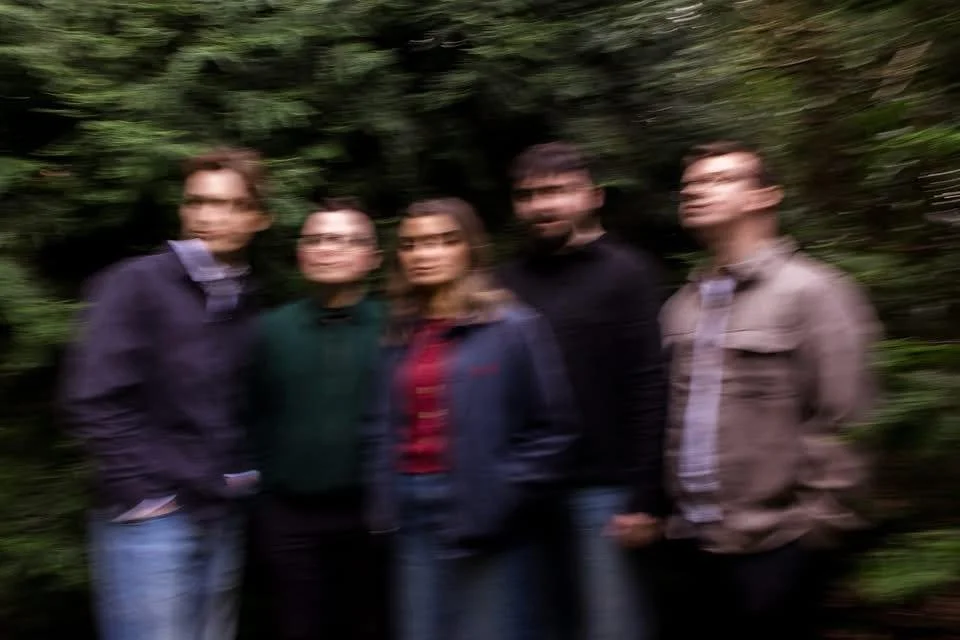
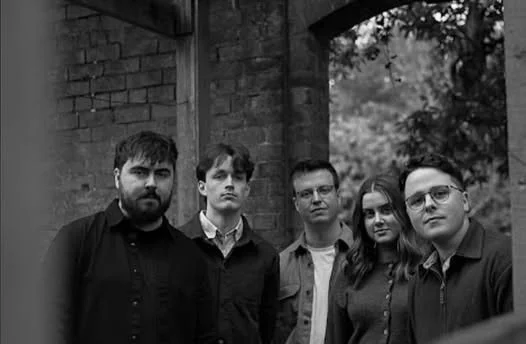
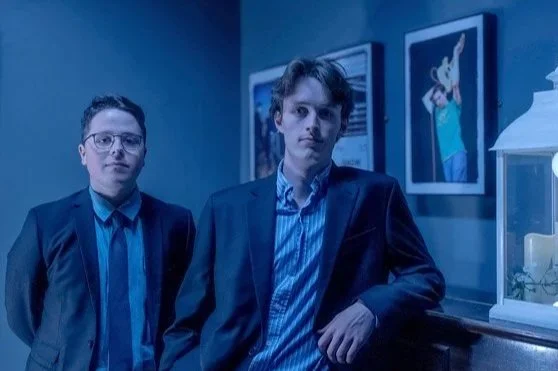
Polar Bolero are a Derry based song-writing duo, Pearse McLaughlin and Cahir Doherty, augmented by an impressive group of musicians to complete the Polar Bolero sound.
KIOSK caught up with them late in 2025 and again in early 2026 when they were about to launch a new recording at the Duncairn Arts Centre in Belfast.
This is PART 1 of a two part interview.
How does the Polar Bolero project come together?
Cahir McLaughlin: We went to school together and we both studied music but we never really collaborated at all when we were at school. We then both went to separate unis.
Pearse Donaghy: I studied music, philosophy and art history at Glasgow University and Cahir studied song-writing and music in BIMM Music Institute in Manchester.
Cahir McLaughlin: And then we both gave up on those respective universities and came back home.
Pearse Donaghy: I was personally struggling trying to live in Glasgow by myself at 18 and so I finished studying music and audio production at Queens University and Cahir studied music at McGee in Derry.
Eventually it just became common sense for us to make music together because we were kind of flailing individually and not doing anything particularly productive. So, it started as a song-writing duo and that's really what it is at its core. It's just that we've we built it out as a band since the early days of working together.

Where did the name come from?
Pearse: The name comes from a book that my dad used to read to me when I when I was a kid, called Polar Bolero, and it was by an author, called Debi Gliori who lives in Scotland. We reached out to her and she was very supportive with regards us using her creation for our name. And she's actually very kindly created the illustrations for our EP release. All the artwork that you see on the singles and the EP cover; that's all done by Debbie Gliori.
How long has the project been going now?
Pearse Donaghy: We started off writing songs together in 2022. We used the name Polar Bolero when we were finishing university and we released a few pieces of music we had recorded together. But then we were not really what we are today. As we said earlier, we were just the duo at that point.
We then decided to go down this band route and release music that we'd recorded with Matty Weir in Belfast who is a fantastic drummer and producer. That is where we are up to now, building on the development into a band.
What is the process by which you create the songs?
Cahir: We don’t read music so in some instances we have to, effectively, hum the parts to the musicians, although sometimes the actual saxophone parts for example will be inherent within in the song. So the track, “Soar”, the sax line was really just taken from the melody line of the song.
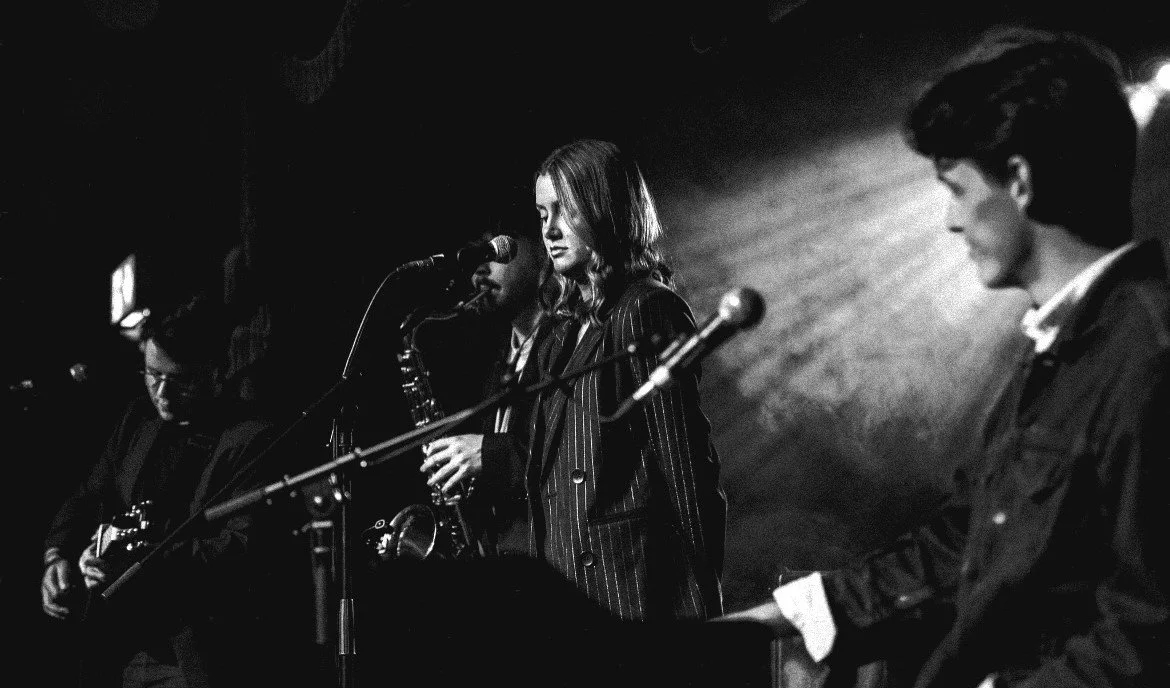
There’s really only one improvised line within the whole EP for the saxophone and that's a massive solo at the end of the song called “Headline Culture” and that was a few takes of improvisation. Every other part was worked on with the sax player, Michael McDowell, who is a great young musician.
Pearse: A lot of the time, if we're trying to create parts for the sax to play, it's often just a case of referencing the song, we might suggest to play the melody line from the verse and carry that into the chorus, things like that, and sometimes it is just through hard work in the practise room and working out what each song needs from the instruments we have available to us.
Are there any musicians who you would consider influences on the work you create?
Cahir: Our main reference point is always The Beatles. I think that would be the main influence on the song-writing, but I think we have different influences for the instrumentation which is a whole other thing.
There's other bands that would be our reference points more closely, for how we use the saxophone or how we use the piano, drums, etcetera. But the Beatles are who we talk about mainly. In recent times when we've gone into the Irish folk area, Declan O'Rourke would be someone we would be influenced by.
Pearse: I think Joshua Burnside, Arborist, and there would be other contemporary Irish artists which influence us. I think Tom Waits is another massive influence. I think the way we structure our business, with the song-writing partnership and the way we work within the band is taken from the way the Beatles did it. It’s a pretty good starting point for us.
There is a lot of interplay within your music of different genres, jazz, soul, folk and an interesting interplay between the instruments as well?
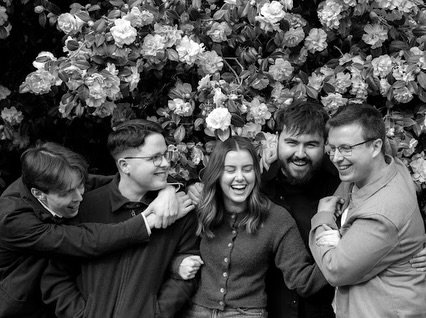
Cahir: That is one of the main talking points that we have and it's one of the main things about our band, the interplay between jazz and Irish traditional music and folk. There is a battle between those genres, and sometimes for the sake of the song one of the genres has to take a back seat. A song might work better when it is predominately a folk song, another works well where there is more of a jazz feel to it.
Pearse: We often talk about putting our songs through a kind of “Polar Bolero machine”, which is the band. And sometimes the songs don't stand that test, and sometimes they really do and we're really happy with how they come out.
Generally we work on the song, we have ideas for how it should be played, how we think the arrangements should be, and then we bring it to the band and sometimes the song can take on a totally new identity based off how we play it with the band in the room. Sometimes we kinda go, maybe this isn't for us or, you know, maybe we need to look at something else. But most of the time, everything works out very positively.
Lyrically you write, in general, about life and love. Would that be reasonable to say?
Cahir: Yes, that is generally accurate, although there's some subtle politics in a song like “Headline Culture”. In that song we discuss things like poverty but all in a very nuanced way, in a very hidden way, really. I do try to write poetically most of the time and I tend to stick to the themes you suggested.
There certainly seems to be a poetic element to the lyric writing?
Cahir: I think we try to write well, and we try to create narratives, and within that we want the lyrics to stand up as works by themselves.