Denisa Hasieberova
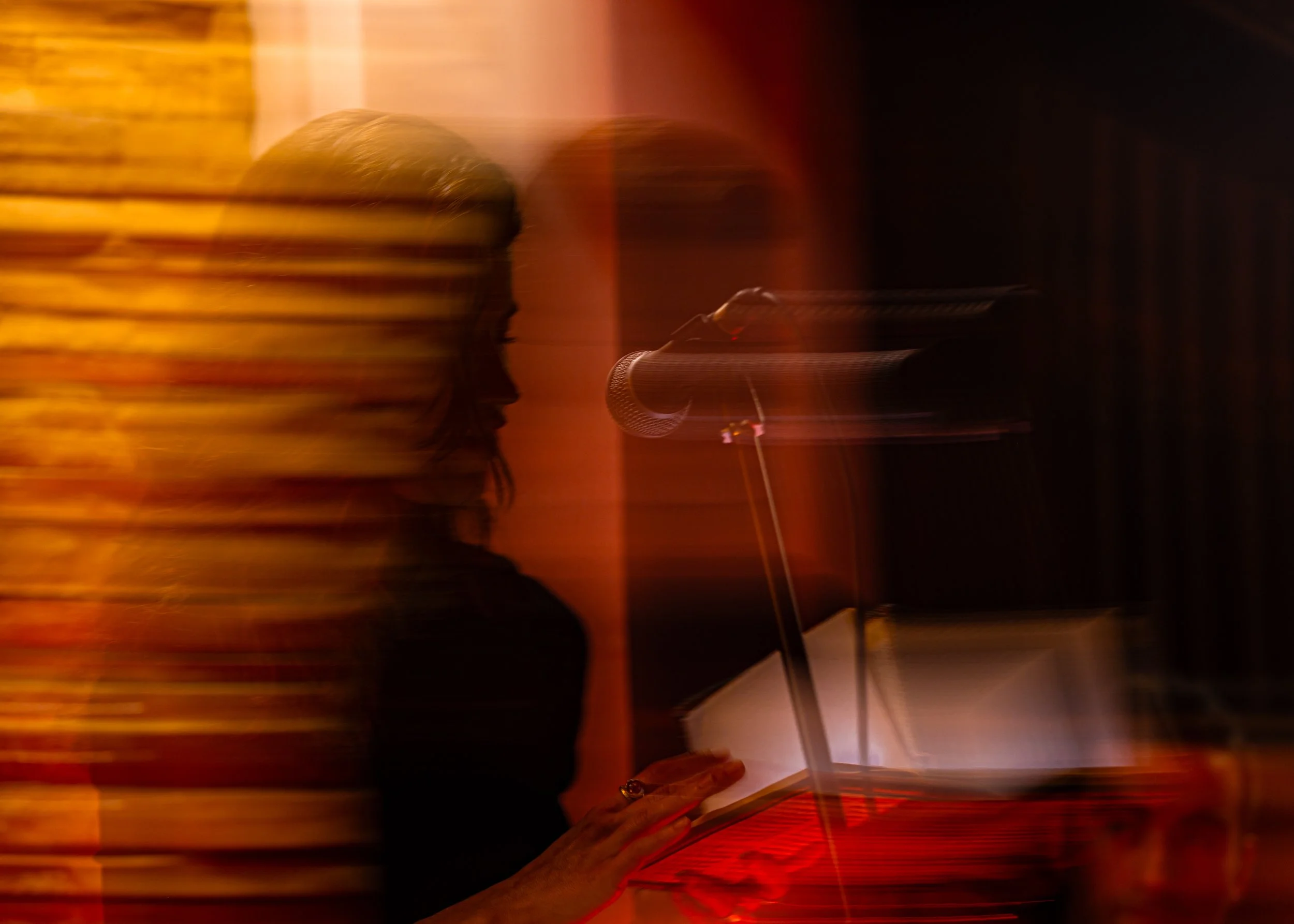
Fresh from her performance at Southbank Centre in London, Kiosk spoke to multimedia artist Denisa Hasieberova about what inspires her poetry and her visual art. In a deeply honest interview, Denisa describes a life changing event that brought her back to her creativity.
What is the inspiration behind your work both poetry and visual arts?
My poetry and visual art come from a deep need to communicate — to tell stories and connect with people. I’m drawn to alternative forms of expression and different ways of responding to the world around me. A lot of my work is shaped by dreams, emotion, and living with an open heart. I grew up in a very loving family, surrounded by nature and a sense of magic, and I often felt closer to animals and plants than to people, which still influences how I see and create. You know, as a child immigrant with poor English and a severe stutter, I struggled to express myself verbally when I was younger, so art became my way of communicating and existing in the world. Drawing, painting, and writing gave me a language beyond speech, and that still shapes everything I do today. More recently, being part of a growing artistic community has been a huge inspiration. The people around me and the connections I’ve made through art and performing push my work in new directions. It encourages me to take more risks and show up more fully in my practice.
We loved your work at Late Night Art at the Oh Yeah Centre last year, could you talk us through that piece?
Thank you so much — it was a really special night. I have a lot of love for the Oh Yeah Centre. I’m still very grateful for the opportunity to have been part of that. For that piece, I ended up creating quite a spontaneous, large-scale painting on the night - a watery vortex with blue portals, white birds, and musical instruments. There was also a drum that didn’t quite result in the way I expected, but it organically transformed into a funky, more abstract portal within the work. It was my first time painting live in a public space on that scale, so I approached it quite intuitively. The theme of the night was music, and that really guided the energy of the piece. It all came together quite naturally in the moment. One of the most unexpected parts was that Mark Mullan from Sci-Fi Ireland saw the work that night, loved the portals and commissioned me to design the front cover for his magazine — it felt like a really serendipitous moment.
You immigrated from Czech Republic to Belfast, does this journey influence your art?
Absolutely. I think art and poetry sit right at the foundation of my identity, and that experience of moving from the Czech Republic to Northern Ireland has shaped my work in a big way. When you are an immigrant, you are often stripped of everything familiar — language, friends, family, and any stable sense of belonging. Your place in the world can feel completely disrupted, and that can be quite disorienting, even traumatising. In that sense, my artistic practice often grounds me, it’s a way of returning home to myself when everything else feels uncertain. At the same time, migration has also given me entirely new perspectives and ways of seeing the world, which I think is important. It has allowed me to explore ideas of home and belonging. It has also helped shape my multicultural identity — this in-between space of not fully belonging here or there, and sometimes feeling invisible as a foreigner. But poetry and visual art keep me rooted.
We recently spoke about how you took a break from creating and returned to your artistic practises after a significant life event, could you tell us a bit about this and the effect it had on your work or ambitions?
Yeah of course. I was very focused on my art and writing when I was younger, but as life progressed I became distracted and gradually moved away from my creative practice. Even though I wasn’t creating a lot, I was thinking about it constantly — literally every day — but I pushed that inner voice aside and chose not to listen to it. I think this came from insecurity, perhaps fear, especially as an immigrant still trying to find my place and ‘make it’ in the world. I explored different paths and experiences, but over time I realised I wasn’t fully present in the one thing I felt most connected to. A very significant event had to happen for me to truly return to my artistic practice. Last year, I had a near-death experience. I won’t bore your readers with the details, but it was quite significant. I was so close to actually being dead. I’m very lucky to be here. When you realise that you are actually dying, you really just know. I can’t explain it. Something otherworldly breathes down your neck and you feel this strange pull, like your soul is being drawn out of your body. It’s bizarre. But there’s a clarity that comes from being so close to death. When it actually came to it, I wasn’t afraid of dying. Instead, I was overwhelmed by this very strong feeling of regret. Regret that I hadn’t fully dedicated myself to my creative work. Regret that I hadn’t written the poems I felt I needed to write or painted all paintings I was supposed to create. There was so much life I still wanted to experience through art, and in that moment I knew I had missed my chance. I’ll never forget it. So when I came around afterwards and realised I had survived, something shifted completely. From that point on, I made a conscious decision to dedicate my life to art and follow my inner voice. My life as an artist has exploded since that decision. Opportunities have come to me that I haven’t even asked for. I feel so grateful. Near-death experiences are a funny thing, there’s no handbook for how to navigate life afterwards either, but when you come out of that sort of thing, you come back changed. And coming back (luckily) recalibrated my perspective on my creative ambitions completely. I now live with a much stronger sense of clarity and fearlessness, and a deeper understanding of my path as an artist.
Could you speak about your artistic process, how do you go from empty page/ canvas to the final creations?
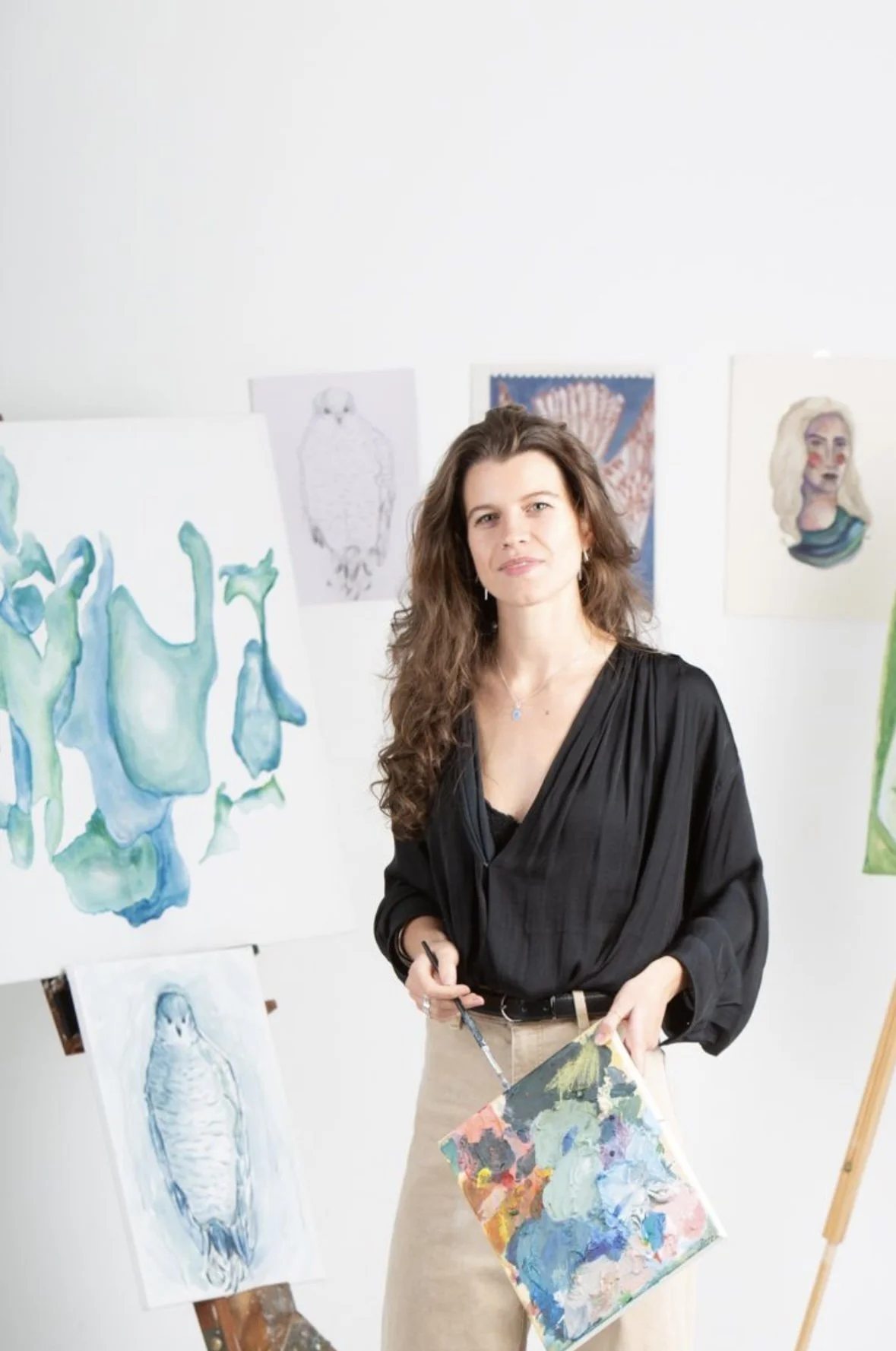
My process is never really the same twice — it depends on how I’m feeling and what’s happening in my life. Ideas often come at random moments, sometimes just before sleep or when I’m in nature, but mostly they come through living and paying attention. I always carry notebooks and my notes app on my phone is full of fragments, images, and thoughts. What I love most is that I rarely fully control the outcome. You start with an idea, but as you work, it often takes on a life of its own and becomes something unexpected. I find that really exciting — the work ends up showing you what it wants to be.
Who are your biggest influences?
My biggest influences have always been people — writers, artists, activists, and the communities around me. I’m also deeply inspired by different cultures and by those who embrace being different. Figures like Dan Eldon and Frida Kahlo have shaped the way I think about creativity and identity, but the person who inspires me most is my great-great-uncle, Bohuš Jágr. He was a woodcut artist, theatre director, poet, traveller, socialist, a lover of nature. I grew up being surrounded by his work, it had a huge impact on me. And quite recently I began learning more about his life through archival research. I feel very connected to him and his work inspires me daily. I’m also influenced by current artists, poets, and musicians based in Belfast, many of whom I’m lucky enough to call friends. They’re just really incredible humans. It feels really special to be part of Belfast’s creative community at the moment.
You have been a part of many festivals, collaborations and events around the province, the sense of community is clearly important to you. Could you tell us about why that is and how it enhances your work?
I really love people — that’s really at the core of it for me. I love human connection and I think creative collaboration is where so much of the energy in my work comes from. I’m also genuinely excited for Belfast at the moment. I feel proud to have this place be part of my identity, which is interesting, because for a long time I actually thought the complete opposite. I often felt a strong urge to leave, to escape, and at times I felt quite suffocated, unseen, and misunderstood here. But over the past year things have really shifted. Creatively and personally, things have opened up in a way I didn’t expect. I feel like I’ve finally found my community here — both with other migrants who share similar experiences, and with local artists and friends who I now hold very close. Belfast has become this really vibrant, collaborative space, a kind of cultural melting pot, and I feel incredibly lucky to be part of it. If you had told me I would feel this way a year ago, I probably would have laughed — but things really can change quite quickly. Because of that, I naturally find myself saying yes to festivals, collaborations, and community projects. It all feeds back into my practice and really shapes what I do.
What’s next for you, where can people see you perform or buy your artwork?
Oh, you’ll probably find me somewhere around Belfast eventually — I tend to turn up where there’s art, music, or poetry involved. The summer is already shaping up to be pretty busy with more performances and projects in the works. I’m also building a new body of work at the moment and hoping to put on an exhibition soon. In the meantime, I’m always open for commissions or if someone wants to buy a piece — people can just reach out to me directly.
And we ask everyone this question, do you have advice for anyone who is feeling like they would like to try poetry or painting, but are a little hesitant or don’t know where to start?
I’m going to keep it simple: just start. Don’t question it, and don’t doubt it. If there’s a story, an image, or a piece of beautiful art that wants to come through you and exist in the world, give it a chance to do so. You don’t need fancy tools or the perfect setup. You’re enough as you are. Art can be such a beautiful conduit for connection with others, and I think the world genuinely needs more of that. I don’t want to sound overly idealistic, but I do believe art is one of the most honest outlets for us as people. Never dismiss that creative pull — it’s more powerful than you might realise, and it can lead to real transformation, even becoming a form of creative resistance and activism in itself.
So just start.