Brian Faloon
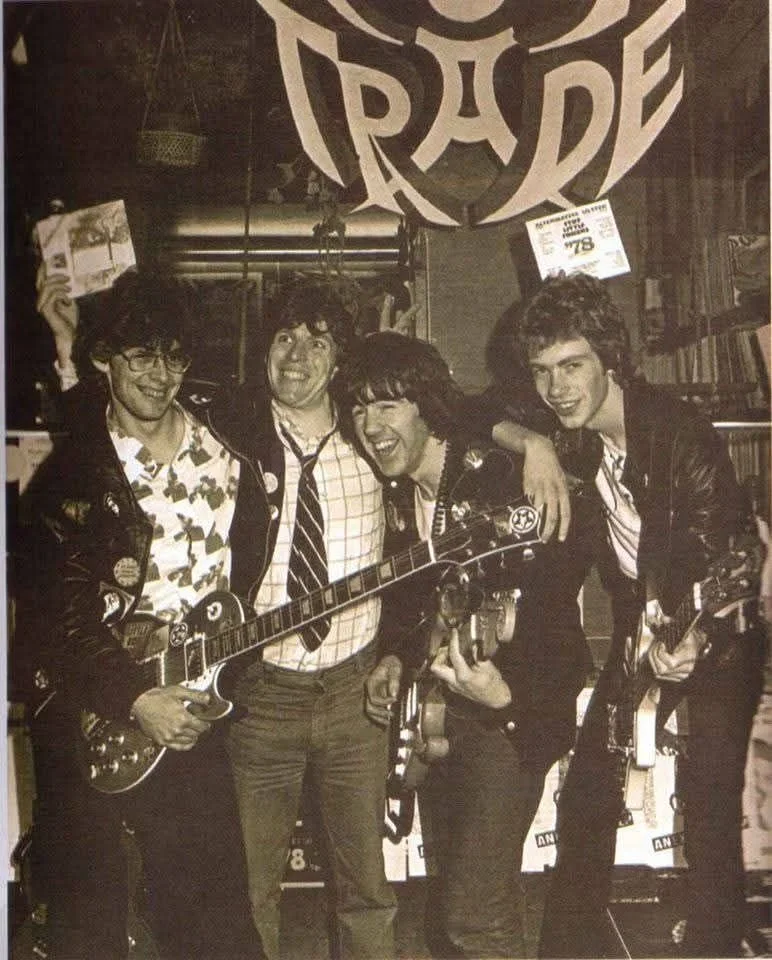
Kiosk speaks to Brian Faloon, original drummer for “Stiff Little Fingers”, about his early life, music and his new musical project, “Radiqwal Dad”
Part 3 – Moving to the United States and working on “Radiqwal Dad”
How did the “Radiqwal Dad” project come about?
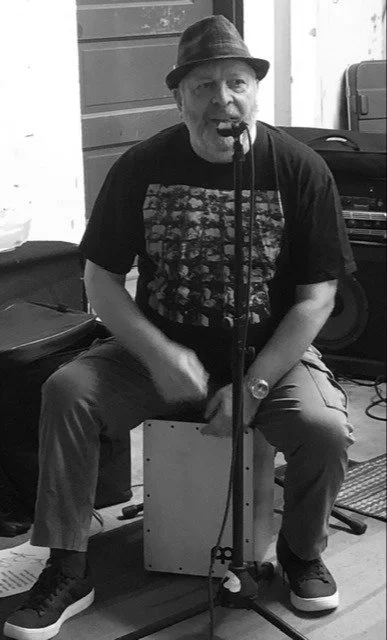
I had moved to the United States in 2011 and had started a new phase of my life there. I had been interested in making music, being creative in some way. There were a few tentative efforts with fellow Rochester musicians including a couple of Love Music Hate Racism events, a gig with y old friend Henry Cluney doing some our old SLF material. I was very tentative in moving into the electronic arena in the beginning. I had this email address which I was using to separate off some political activity from some of my other activities. I decided to use that as a starting point for an alias, so to speak.
As I wasn’t really part of a band scene, I wanted to use digital and electronic media, so I bought an Apple Mac from my wife’s cousin, who is a professional photographer, and I added a Casio keyboard that was my stepdaughter’s, interfaces, microphones and I taught myself how to use various digital audio workspaces. However, the easiest one to learn and stick for me, is GarageBand.
How does that develop?
Having messed around with loops and samples my first real serious, concrete piece of music came about because a friend of mine, Jeff Gorfine, a Vietnam veteran, who saw that there was an exhibition by a Vietnamese artist about the Vietnam War. We went along to the Minneapolis Institute of Arts and we were both absolutely struck by the emotion of it all. There was an installation that reflected the imbalance in the scale of the war dead and casualties, a visualisation of the use and effects of Agent Orange, and there were paintings that used familiar Vietnam war scenes but had the human forms removed from them. They were quite harrowing.
And we were so impressed we had to go twice.
I took the artist’s names and notes of the paintings and started to build some music around those titles, soundscapes you might call them. I was attempting to use these soundscapes as a way of interpreting the moods and feelings regarding the impact that the exhibition had on me. That became I Smile, and I Remember Everything which is on my Bandcamp page (shameless plug!)
From there I have produced a number of recordings, some with just a few tracks and some more substantial works. I have used Brian Eno’s Scape app to produce the background drones and soundscapes that inhabit much of the music I have produced since, such as “Sou-Terrain and Dolmen.” Other works might feel a little bit more accessible using vocal samples from Stockley Carmichael, Malcolm X and Gil Scot-Heron alongside old blues tracks.
And the latest work, “We are nor friends - We never were!” How does that get produced?
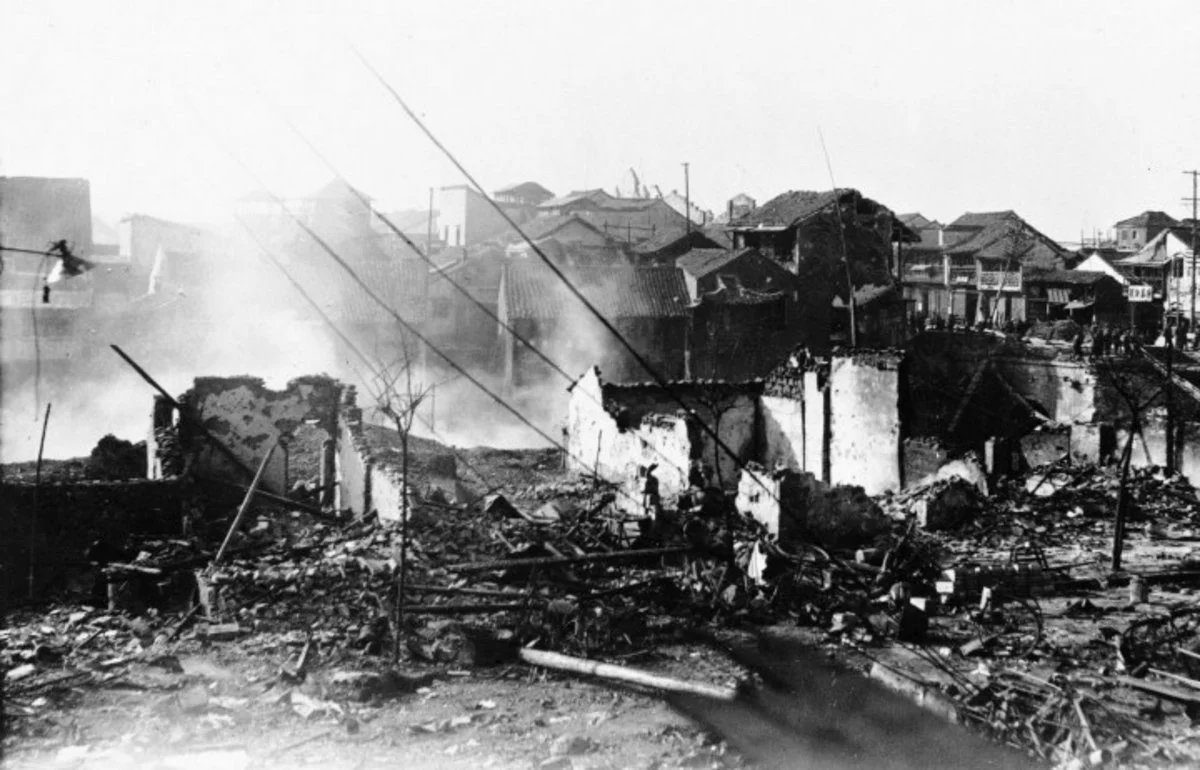
That emerged from reading a piece on the BBC website on what I knew from my historical knowledge as “The Rape of Nanking”. It has subsequently been titled, “The Massacre of Nanjing” This was an episode in 1937, the Second World War, where the Japanese army went into the Chinese capital of Nanking, and in a short period of time massacred everything in sight, man, woman, child. There are estimates suggesting around 300,000 people were killed. I was struck by many of the comments by some of the survivors and the title comes from the fact that in the process of aiming to build reconciliation, many survivors are not reconciled to the situation at all, and the incident still causes tension in Sino-Japanese relations to this day.
I worked on trying to capture feelings, emotions from the words and phrases which came out of the whole reconciliation process, many of which echoes those that came out of the Troubles at home; some forgave, some chose to forget, and some hanker for justice yet.
The music has an orchestral element to it. It also has a sense of connection to German electronic music from perhaps the early to mid 1970’s. Would that be reasonable to say?
Yes, that is fair comment. I was listening to electronic music in the 1970’s. Music from Tangerine Dream, Kraftwerk, Jean-Michel Jarre, Brian Eno and that was part of broadening my musical tastes and knowledge. However, it was not really part of what I was used to playing in any live environment, and I had no skill with a keyboard or synthesizer.
I have always had an attitude towards electronic music, that it isn’t dull music. If you listen to the great exponents of this type of music, Phillip Glass, John Cage to some extent, John Adams, they are extremely expressive and more modern interpretations by Jóhann Jóhannsson or Hans Zimmer, produce hugely emotive pieces of music. Jóhann Jóhannsson would certainly be a more recent influence mixing electronica with brass and orchestral movements.
How does that transfer into you producing your music?
I look around for sounds and rhythms which provide evocative soundscapes. I found sounds from Brian Eno’s generative music programs suited the process well. The Scapes app in particular but also Bloom provided a lot of material. I imported some of the sounds from there. I build up the material, layering sounds on top of beats and vocal samples, including religious and choral music. The “We are not Friends…” project took a few months to complete and I was building up the soundscapes over that period, adding elements as I went along. I also aimed to add orchestral elements to the work. I create sections, movements where the music shifts and changes. I think that is quite important to do to avoid an overly repetitious element to the music.
We seem to be headed to more substantial military confrontations. Is there an anti-war theme built into the work you are producing?
There is a thread which takes the experiences of the past and uses them to show the futility of war, particularly with the Vietnam war and Nanking pieces, that war, is usually devastating on the civilian populations that are impacted by its consequences. There are deep physical and psychological scars that may never heal.
In the two war-related pieces my focus is on anti-war as much as it is on anti-racism and anti- capitalism, which also feature in some of the other pieces such as on “Along the dead shores of the last sea: reflecting climate and ecological collapse as an emerging threat to so-called civilization.
Living here in the US under the authoritarian, Trumpian regime the threat to the established order is real but not in a way that is to the betterment of working-class people, immigrants, the sick and the poor!
Where to now?
I am just in the throes of working on one piece now which is looking at what is happening in Minneapolis. The situation with Trump, ICE, the National Guard and the counter protests. That is something a lot of people here are trying to document, and I want to play my part in that. One of the many good things about living in Minnesota is the sense of fair play and a willingness to stand up against injustice, especially that visited by this President in acts of political revenge! That piece may need a little more reflection and distance. I am also working on another substantial piece of work based on Earnest Shackleton’s Endeavour expedition to Antarctica and the epic rescue and survival story that emerged from that ill-fated journey.
All in all, plenty to keep me occupied.